Mondulkiri: hills, forest and Cambodia’s best wildlife days
Is Mondulkiri worth the long road from Phnom Penh? What Sen Monorom, the elephant sanctuary, gibbon treks and waterfalls involve, and how many days you need.
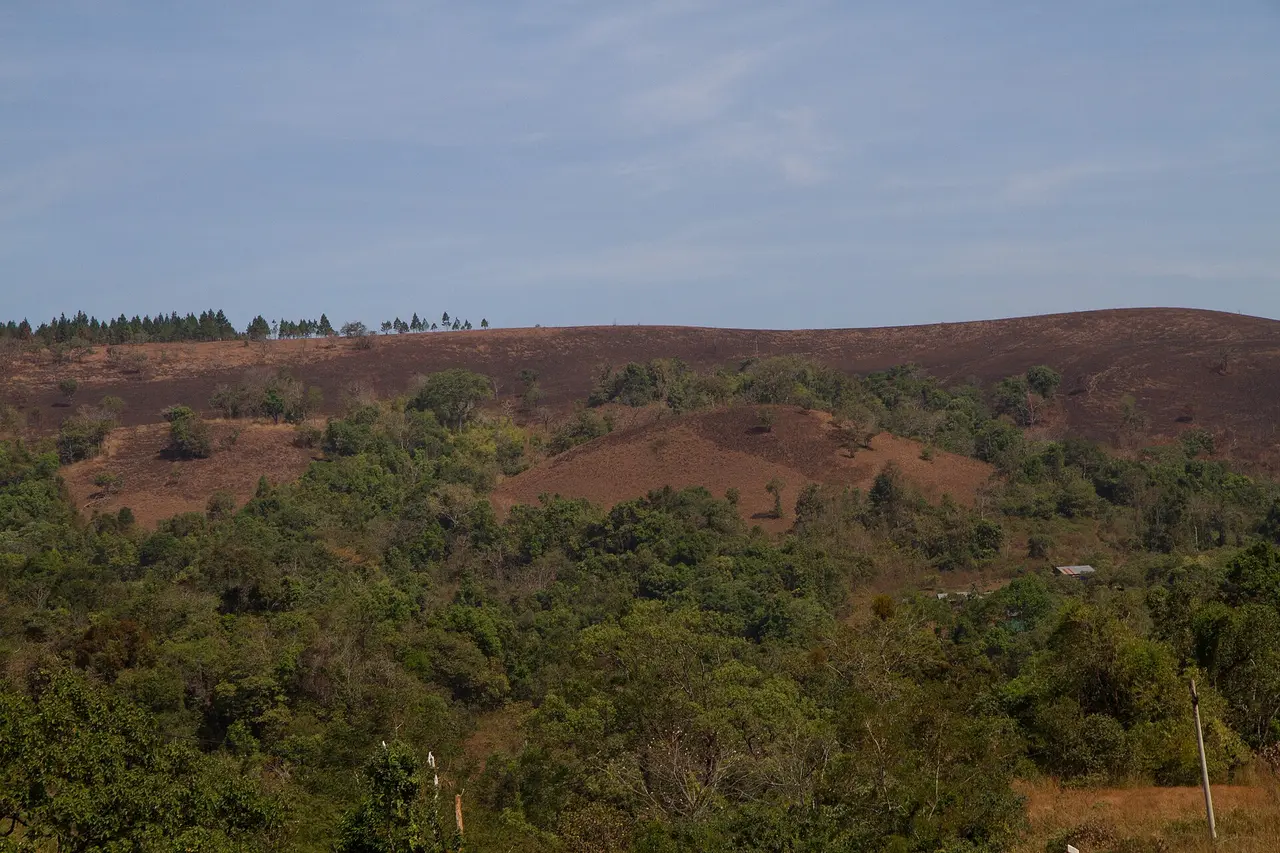
Ridges of Mondulkiri in the dry season (November)
Researched from published sources
In short
Yes, if you have at least four days and want wildlife, cooler hills and very few other tourists. Sen Monorom is 359 km from Phnom Penh, a full day each way by road, so Mondulkiri rewards two or three nights on the ground and punishes a rushed visit.
- Phnom Penh (city centre)
- National Road 7, east across the Mekong plainsThe first part of the 359 kmLeave early to arrive in daylight
- Snuol
- National Road 76, climbing into the hills6 to 8.5 hours in total from Phnom PenhPrivate car about 6.5 hours (Daytrip); shared vans 6 to 8.5 hours with delays reported
- Sen Monorom
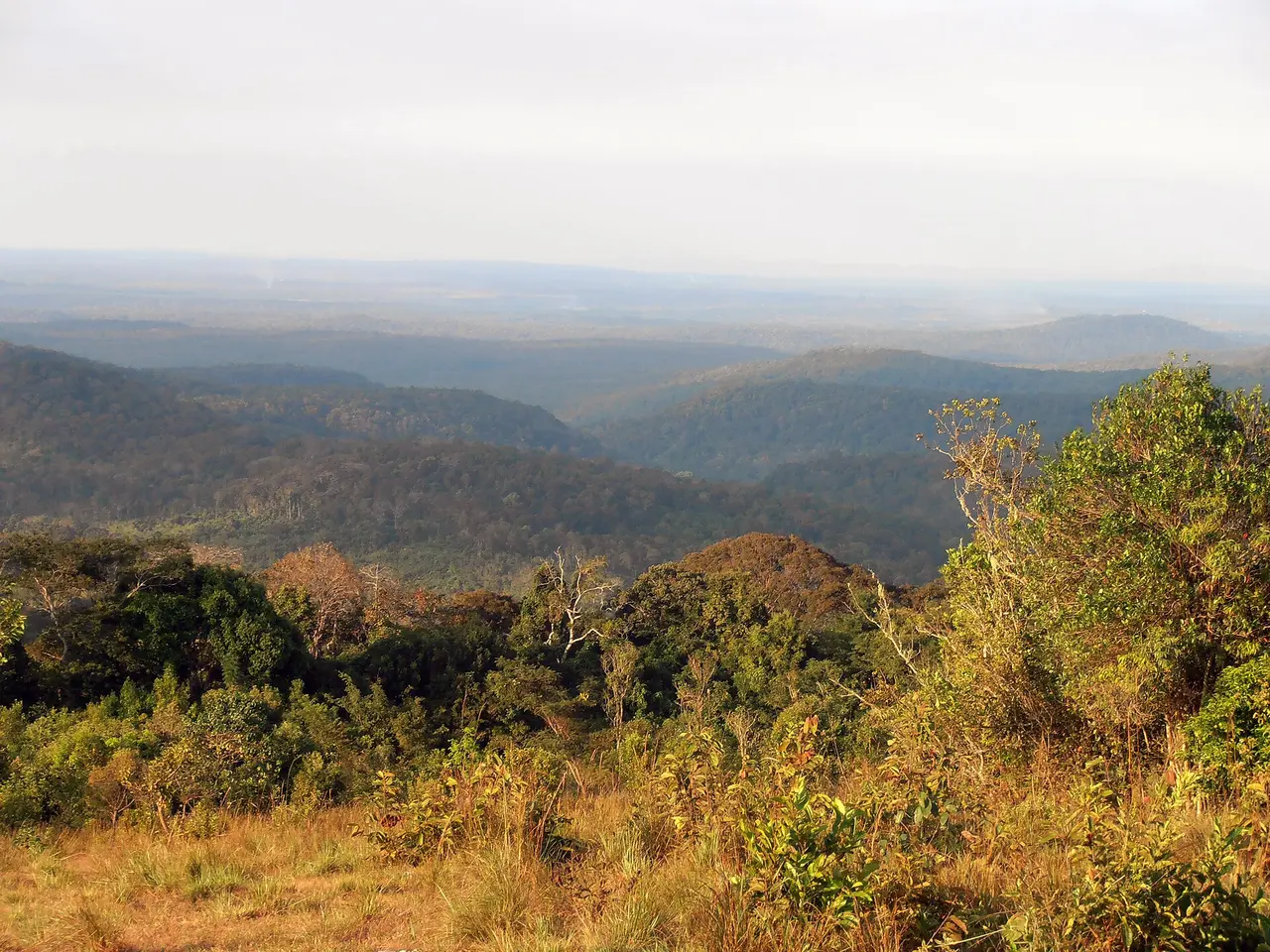
Mondulkiri is Cambodia’s largest province and one of its least populated. The plains of the Mekong give way to rolling hills of grass, red earth and forest, and the provincial capital, Sen Monorom, sits at around 800 metres. Mornings in the dry season are cool enough for a jacket, which surprises most people arriving from Phnom Penh.
The province is home to the Bunong, an Indigenous people whose villages, farms and forests surround the town. Much of what makes Mondulkiri special for visitors, from elephant walks to gibbon tracking, involves Bunong guides and land, which is a good reason to choose experiences carefully.
What you come here for
Elephants, on the elephants’ terms. The Elephant Valley Project, a sanctuary for elephants retired from logging and tourism work, has run near Sen Monorom since 2006. Its published rules are blunt: no riding, no tricks, no feeding, no swimming. A day there means walking through forest behind the elephants and watching them behave like elephants. Other operators in town offer feeding and bathing; our guide to elephant experiences explains what to ask.
Wild gibbons at dawn. About 30 km from Sen Monorom, in Keo Seima Wildlife Sanctuary, the Jahoo project takes small groups out before sunrise to find a habituated family of southern yellow-cheeked gibbons, with black-shanked douc langurs often in the same forest. Because the family is habituated to people, the odds are far better than on an ordinary forest walk, but it is still a search for wild animals, not a guarantee. See Keo Seima.
Waterfalls and hill country. Bou Sra, about 34 km from town on a mostly paved road, drops in two tiers into a forest pool and is the province’s best-known waterfall. Closer to town are smaller falls and viewpoints over the forested ridges. These are half-day trips that fit around wildlife days.
Getting there
There is no airport and no railway, so everyone comes by road from Phnom Penh, usually via Snuol on National Roads 7 and 76. Recent sources describe the road as paved and open all year; the time comes mostly from distance and traffic. A private car takes about six and a half hours; shared minivans are cheaper but often slower, and 2025 traveler reviews describe breakdowns and late arrivals. From Kratie, on the Mekong, it is about 207 km. The full comparison of options is in getting to Mondulkiri.
Once in Sen Monorom, the main providers collect you from your accommodation, which is one reason the town works well as a base even if you do not ride a motorbike. See Mondulkiri without a motorbike.
How many days
Four days from Phnom Penh is the realistic minimum: up, elephant day, gibbon day, back. The difficulty is that each provider runs on its own calendar. The sanctuary’s day visits run Sunday to Friday (the Explorer day Monday to Friday), and in the low season Sunday trips need four people. Jahoo runs one tour per day for up to six guests. Fitting both into two consecutive days, in the right order, with transport that leaves early enough, is the part most self-planned trips get wrong.
Five or six days gives you breathing room: a spare day for rain, an overnight at the sanctuary or the gibbon camp, or a waterfall morning. Our four-day itinerary shows one way to sequence it.
Who it suits, and who it does not
Mondulkiri suits travelers who are happy to walk several kilometres in heat, who value watching animals over touching them, and who have ten or more days in Cambodia. It suits families with children over ten for the gibbon trek and younger children for the sanctuary’s shorter visit.
It is a poor fit if you have less than a week in the country, dislike long road days, or want polished resort comfort: accommodation is simple to comfortable, not luxurious. If the Cardamom Mountains closer to Phnom Penh and the coast fit your route better, see Mondulkiri or the Cardamoms.
Safety and practicalities
Mondulkiri is about 300 km from the Thai land border, so the current advice against travel near that border does not apply. Normal precautions do: roads are the main risk, so travel in daylight with a careful driver, and carry travel insurance that covers medical evacuation, which the elephant sanctuary requires anyway. Sen Monorom has bank branches, but carry enough US dollars in small notes for fees, meals and tips in case a machine is empty.
Seasons at a glance
What the providers publish
These are the facts each provider states on its own website, with the date we read them. Naming a provider here describes it; it is not an endorsement or a partnership.
Questions travelers ask
Is Mondulkiri worth visiting?
For travelers who want wildlife and a quieter, cooler side of Cambodia, yes. You can walk with former working elephants at a sanctuary that does not allow riding or feeding, track wild gibbons with Bunong guides in Keo Seima, and swim below waterfalls. It is not worth it on a two-day round trip: the road from Phnom Penh takes most of a day each way.
How many days do I need in Mondulkiri?
Plan four days from Phnom Penh as a minimum: one day to travel up, two full days for an elephant day and a gibbon day, and one day to travel back. Five or six days gives you a spare day for weather and a waterfall, or an overnight at the elephant sanctuary or the gibbon camp.
Can I fly to Mondulkiri?
No. There is no commercial airport in the province. A new airport has been proposed and approved in principle, but it has not been built. Everyone arrives by road.
Is Mondulkiri affected by the Thai border advice?
No. The UK and Dutch governments advise against travel within 20 km of the Cambodia-Thailand land border. Mondulkiri is on the opposite side of the country, next to Vietnam, about 300 km from that border. Normal travel advice for Cambodia applies.
When is the best time to go?
November to April is the dry season, with December to February the coolest months. Roads, trails and the last stretch to the gibbon camp are easiest then. From June to October the hills are green and quiet, but expect afternoon rain, mud and the occasional walk where a vehicle cannot reach.
Sources and checks
Time-sensitive details on this page (prices, schedules, travel times, access) were last checked against the sources below on 11 October 2026. They change, so any proposal reconfirms them with the provider first.
- Elephant Valley Project: visit options, prices and terms
- Jahoo: tours and prices
- Jahoo: getting to Keo Seima from Phnom Penh (March 2026)
- Daytrip: private transfers to Sen Monorom (route, distance, time)
- Omio: Kim Seng Express Phnom Penh to Sen Monorom timetable listing
- Open Development Cambodia: planned Mondulkiri airport
- UK FCDO travel advice for Cambodia
- OpenStreetMap routing (road distances)
Tell us what you want from eastern Cambodia
Share your dates, what you hope to see and how you like to travel. We reply with a first view of the route and, when you are ready, a written proposal with the price, what it includes and who provides each part of the trip.