Gibbons and primates: tracking wild apes in Keo Seima
Tracking wild yellow-cheeked gibbons and douc langurs in Keo Seima, Mondulkiri: how a dawn trek works, price, minimum age, fitness and your chances.
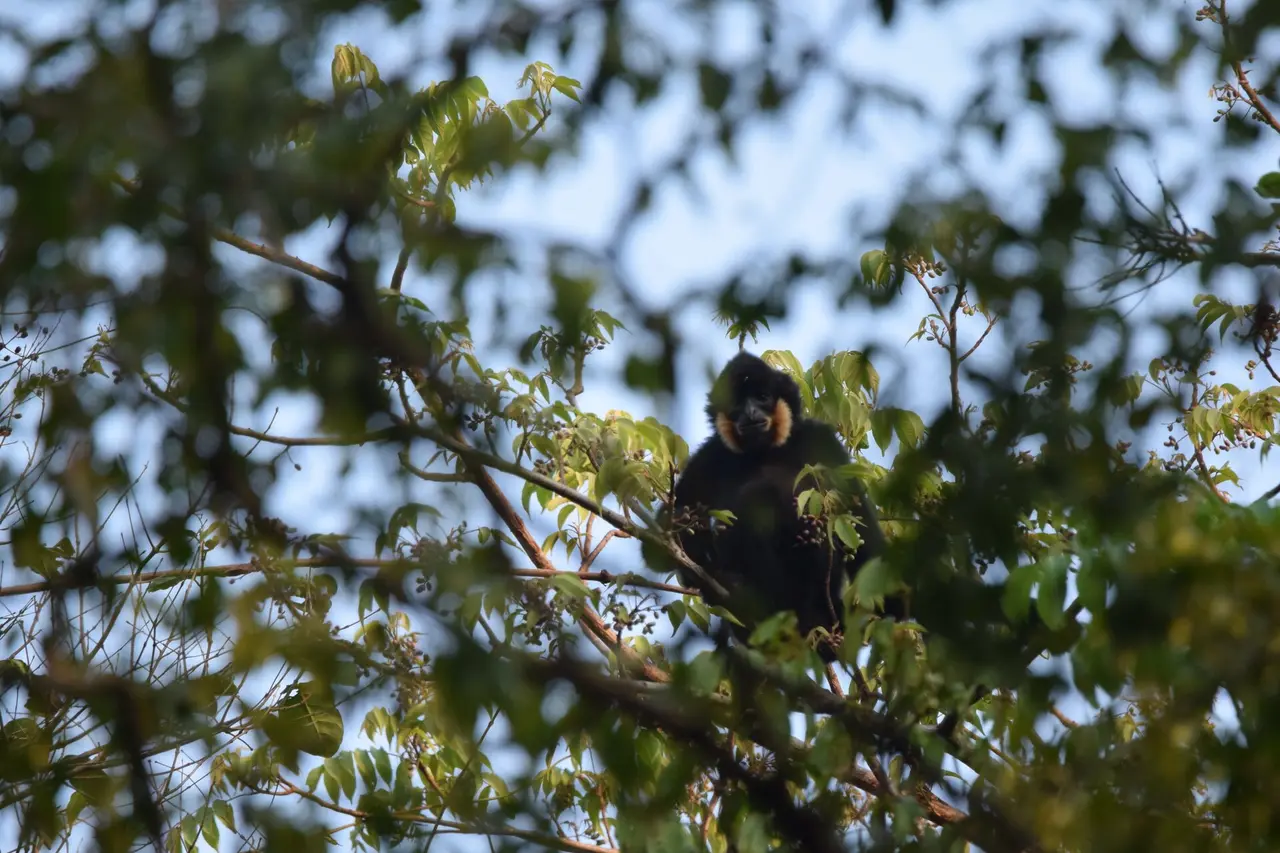
Southern yellow-cheeked gibbon, recorded in Mondulkiri province
Researched from published sources
In short
The best-organised way to see wild gibbons in Cambodia is a dawn trek with the Jahoo project in Keo Seima Wildlife Sanctuary, about 30 km from Sen Monorom. Bunong guides follow a habituated gibbon family; doucs are often seen too. A one-day trek is US$185 with transfers and meals, for ages 10 and over.
The day starts in the dark. As the light comes up, a gibbon family begins to call, a rising and falling duet that carries through the trees, and with luck the singers appear, swinging between branches high above.
How it works
Jahoo’s walks are led by Bunong guides, who set out early to find the habituated family while it is calling. Once the gibbons are located, you follow at a respectful distance as they feed and move, for as long as the guides judge right. The rest of the day is a forest walk with breakfast and lunch, looking for black-shanked douc langurs, birds and other wildlife.
The one-day trek costs US$185 and includes transfers from Sen Monorom, guide fees, entrance, a community fund contribution, meals and binoculars. The two-day option (US$245) adds a night at a bamboo camp and a night walk; the three-day option (US$310) goes further. Groups are one to six guests, and Jahoo runs one tour a day.
Realistic expectations
Sightings are likely but never certain. Gibbons live high in the canopy, so views can be brief or partly hidden, and photography needs patience and a long lens. The walking is hot and steep in places, and the minimum age is 10.
Where else?
Gibbons and doucs live in other forests in Cambodia, but few are set up for visitors with trained guides and a habituated group. For most travelers, Keo Seima is the practical choice, and it combines naturally with an elephant day near Sen Monorom.
What the providers publish
These are the facts each provider states on its own website, with the date we read them. Naming a provider here describes it; it is not an endorsement or a partnership.
Questions travelers ask
What does “habituated” mean?
The gibbon family has been followed by researchers and guides for years and tolerates people nearby without fleeing. It does not mean tame or fed. You watch them in the canopy as they go about their day.
What should I bring?
Closed walking shoes, long trousers, insect repellent, a hat, and a light layer for the cool early start in the dry season. Jahoo provides binoculars, water and meals on the day trek. A camera with a zoom lens helps; gibbons are high up.
Is one day enough?
One day gives a good chance of seeing the gibbons. Two days, with a night at the bamboo camp, adds a night walk and a second morning in the forest, which improves your chances and your photographs.
Sources and checks
Time-sensitive details on this page (prices, schedules, travel times, access) were last checked against the sources below on 11 October 2026. They change, so any proposal reconfirms them with the provider first.
Tell us what you want from eastern Cambodia
Share your dates, what you hope to see and how you like to travel. We reply with a first view of the route and, when you are ready, a written proposal with the price, what it includes and who provides each part of the trip.